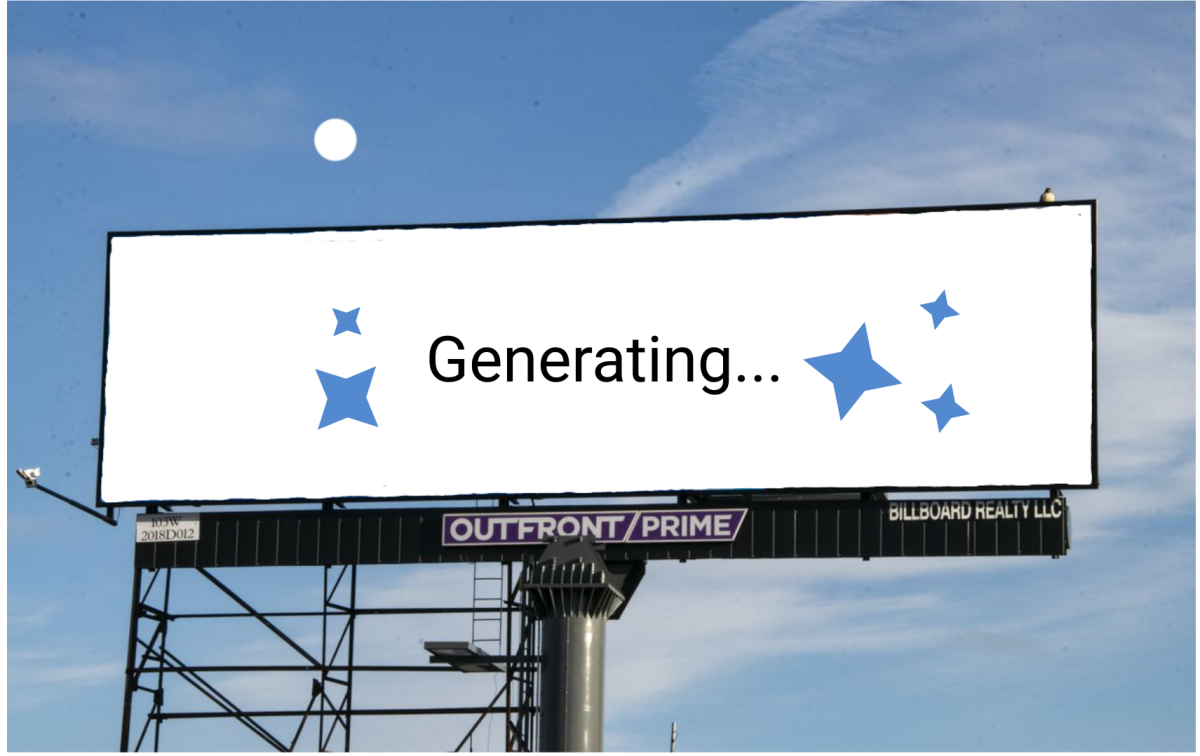
As Artificial Intelligence (AI) photo and video generation gets better and better, companies small and large have begun to use AI as a tool for advertising. Major companies such as McDonald’s, Coca-Cola, and Kalshi have released official ads containing AI generated video. The use of AI in advertising has garnered mixed responses; many see it as a way to increase productivity, while others believe that AI shouldn’t be used to replace people in creative jobs.
Debuting on Nov. 3, 2025, Coca-Cola’s holiday campaign included two AI generated versions of a commercial entitled “Holidays are Coming,” with one airing globally and one exclusively airing in the US. The animation for this ad took 30 days to create with the use of generative AI, which produced over 70,000 video clips for the advertisement. Coca-Cola’s Global Vice President & Head of Generative AI Pratik Thakar said on Coca-Cola’s official website that AI can be a powerful tool in the production of advertisements, although it isn’t used for creative direction of the projects it is involved in.
“We’re committed to using AI as a human enabler, where it makes sense. Creative ambition, direction, and thought leadership has and always will be human-led. AI is a superpower when it comes to execution and production, making what was previously impossible, possible,” Thakar said.
Although it can be beneficial for companies, many consumers have expressed their unhappiness with the use of AI in creative fields such as marketing. After McDonald’s released an AI generated ad entitled “The Most Terrible Time of the Year” in the Netherlands, they received enough backlash to lead them to stop showing the ad. While the company attributed the response to the ad’s negativity about the winter holiday season, many people were also unhappy with the use of AI to create the ad, rather than human artists or actors. The company that produced the ad was Sweetshop Films. Chief Executive Melanie Bridge defended the use of AI in a post on LinkedIn, garnering a response from co-founder Emlyn Davies of independent production company Bomper Studio. While Bridge pointed out that human labor was a part of the process, Davies argued that the use of AI still cut out a substantial amount of jobs for real people.
“What about the humans who would have been in it, the actors, the choir? Ten people on a project like this is a tiny amount compared to shooting it traditionally live action,” Davies said.
In contrast to the human teams and weeks of time that McDonald’s and Coca-Cola used to create their AI ads, Kalshi, a sports betting app, showed that AI can be used to create content quickly and with less labor. In a post on X, the creator of Kalshi’s ad, P.J. Accetturo, stated that the ad took him only two days to create and was made with the intention of utilising shock value and catering to shortening attention spans.
“Kalshi hired me to make the most unhinged NBA Finals commercial possible. High-dopamine Veo 3 videos will be the ad trend of 2025,” Accetturo said.