On Jan. 3, the United States launched a military operation on Venezuela that led to the capture of Venezuelan President Nicolás Maduro and his wife Cilia Flores. The United States Armed Forces cited the reason for the arrest of Maduro as a prompt for a regime change. The Administration denotes the criminal indictment for both President Maduro and Flores, on the grounds of drug-related offenses.
Following the capture of Maduro, President Donald Trump held a press conference where he said that the United States would be taking control of Venezuela until a cautious transition of power can take place.
“We are going to run the country until such time as we can do a safe, proper, and judicious transition. And it has to be judicious, [because] that’s what we’re all about. We want peace, liberty, and justice for the great people of Venezuela. That includes many from Venezuela that are now living in the United States, and want to go back to their country. It’s their homeland,” Trump said.
Prior to this military operation, Venezuela has been in an economic crisis for more than a decade. Venezuela’s economy is highly dependent on their oil revenue, which collapsed under the control of Maduro. Venezuela’s oil reserves are the backbone of their economy providing around 90 percent of their export revenue. Venezuela is sitting on approximately 303 billion barrels worth of crude oil, which, according to the US Energy Information Administration (EIA), boils down to about a fifth of the world’s global reserves. In recent years, the international sanctions placed on the Venezuelan government and the deep economic crisis that they are currently in, has contributed to the decline of the country’s oil industry. This has led to hyperinflation, food shortages, and mass emigration. Not only did the country’s oil industry decline after the economic crisis, according to the EIA, the lack of investment and maintenance also was a big contributor to Venezuela’s economic emergency.
In addition, Maduro has been linked to terrorist groups such as the Cartel of the Suns as well as being associated with narco-terrorism and drug trafficking. However, Maduro has denied all accusations regarding the cartel and drug trades and has accused the US of using their war on drugs to overthrow him and acquire Venezuela’s oil reserves.
The US military has had a standing reward for his arrest for many years now, which was set to $50 million in 2025 by Trump. Since then, Maduro made a public statement, addressing Trump, where he challenged The President as well as the US military to come and arrest him.
“Come and get me. I’ll wait here in Miraflores, don’t take too long. Coward,” Maduro said. Months after this challenge, Maduro was placed in custody by US law enforcement facing charges of narco-terrorism conspiracy, cocaine importation conspiracy, using/possessing machine guns, and conspiring to use/possess machine guns and destructive devices.
As of Jan. 16, the US remains in control of the transition Venezuela’s power, oil revenue, and is currently working with Vice President Delcy Rodríguez to keep the Venezuelan economy stabilized.
Categories:
The United States takes temporary control of Venezuela
January 22, 2026
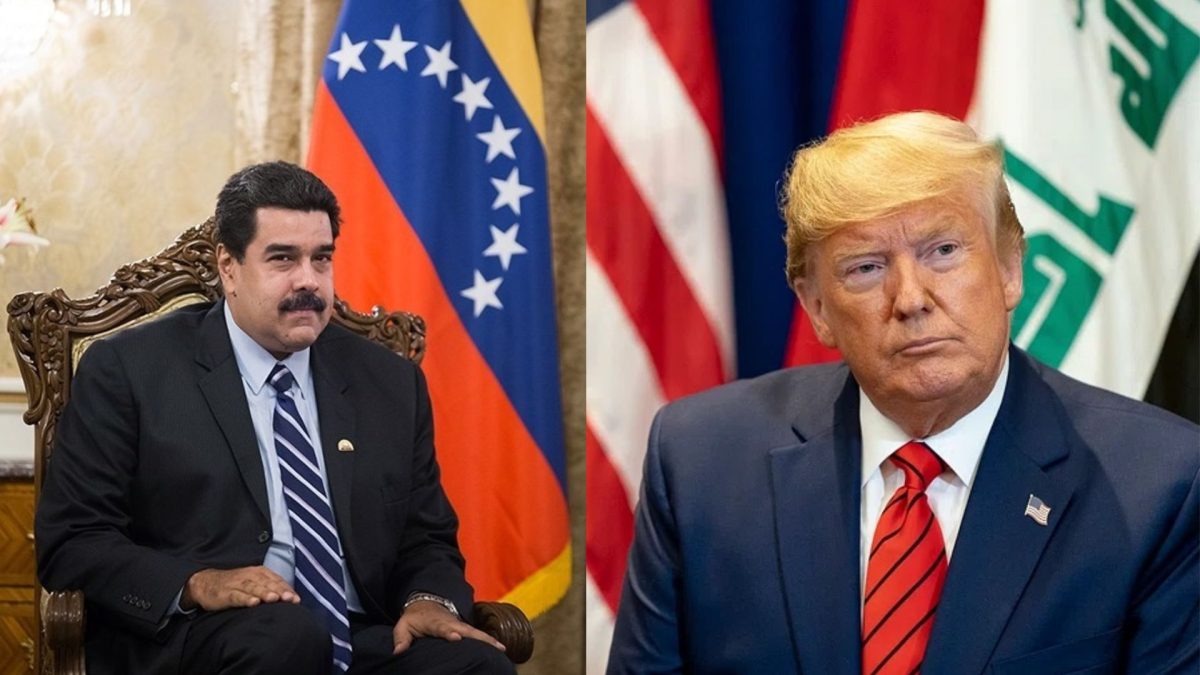
The image depicts Venezuelan President Nicolás Maduro side by side with United States President Donald Trump. (media created by Maxine Johnston)
Tags:
Donate to The Talon
$125
$500
Contributed
Our Goal
Your donation will support the student journalists of Rockwood Summit High School. Your contribution will allow us to purchase equipment and cover our annual website hosting costs.
More to Discover




About the Contributor

Maxine Johnston, Business Manager
Class of 2027
Time on staff: 2 years
Favorite animal: Ravens, because they are incredibly smart and beautiful.
Dream superpower: Talking to animals, I feel like I would have really deep conversations with my cats.
Favorite newspaper memory: Eating Taco Bell at staylates.