Teenagers have always created their own ways of communicating, and slang plays an integral role in that. Most slang originates from TikTok, like a secret code that sets teens apart from adults and young children. But keeping up with the latest terms and phrases can feel like a full-time job. Just when you think you’ve got it down, a new set of meaningless terms pop up.
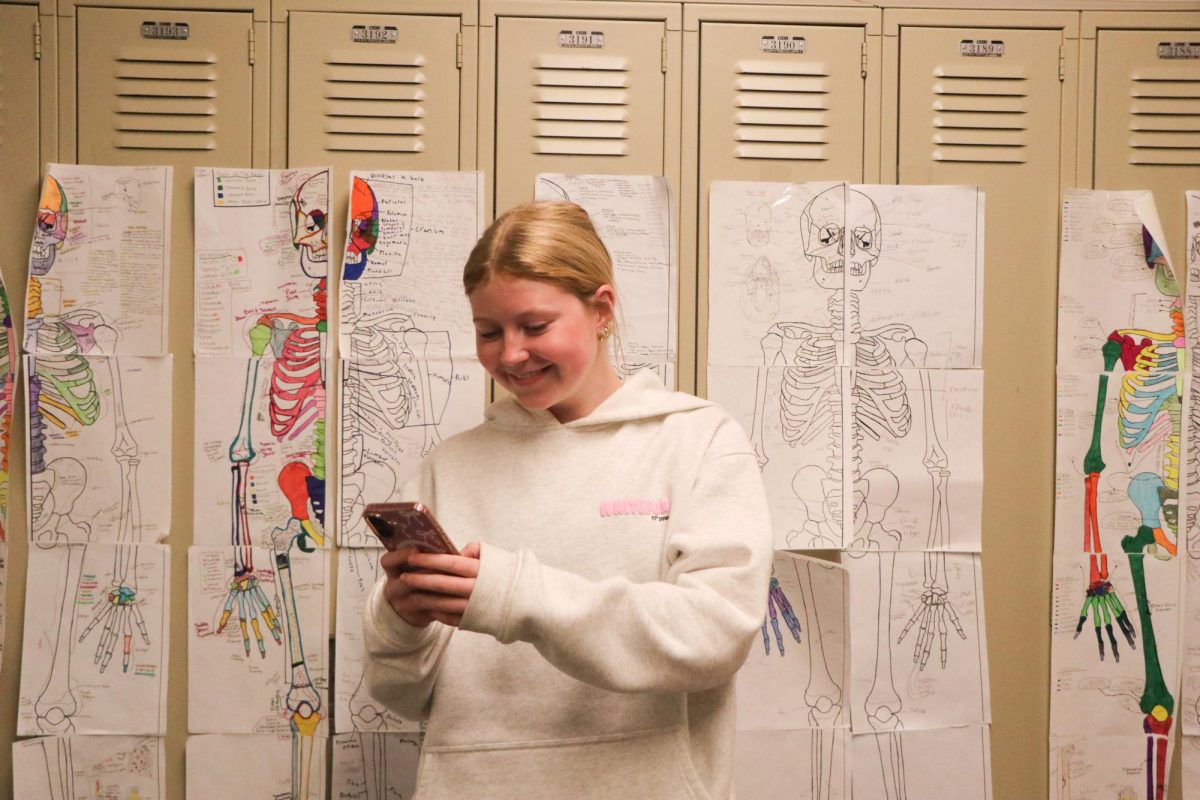
At Summit, a common term thrown around is “huzz,” a shortened word for “husband,” and is used as a fun and playful way to refer to one’s significant other. Junior Reilly Lechner agrees with the use of “huzz” being very common.
“I say huzz sometimes [when i’m] with a friend and we see a guy that is cute we might say “thats huzz” meaning he’s cute,” Lechner said.
From homework, to class discussions, it seems like our everyday speech has shifted toward teen slang. For many students, slang feels like a natural way of communication. Many can say they have used or said teen slang and abbreviations in the classroom or on an assignment.
“On my [chemistry] paper’s, if I didn’t think my answer was 100% correct, I would write I.D.E.K (I don’t even know) on a paper,” Lechner said.
The use of teen slang is all around. In social media, in books, and everywhere else. The way teens use slang can help with words used for school, Lechner said.
“Some of these slang words help us to understand more. For example, I have the word ‘nonchalant’ [as] one of my vocabulary words, and I didn’t even have to study it,” Lechner said.
Originating from TikTok, the word “nonchalant” can be used in a slang reference, but also a useful word in the classroom for essays or assignments.
With all the moments of students using teen slang in the classroom, slang can also guide students in the wrong direction, and could maybe even be misinterpreting, Lechner said.
“Maybe we can misinterpret [the] actual meaning of a word,” Lechner said.
Why do teens use slang anyway? For one, it can be used as a way for teens to connect and create bonds within school, as using the same slang can create a sense of community and comfortability.
Though it may not be welcome in the classroom, or in assignments, it’s encouraged that students create an environment that allows teens to express themselves and show individuality along with being seen as a very valuable part of teen culture. Even if our parents and teachers have no idea what we’re saying.